Weaving Code: When the Loom Met the Algorithm
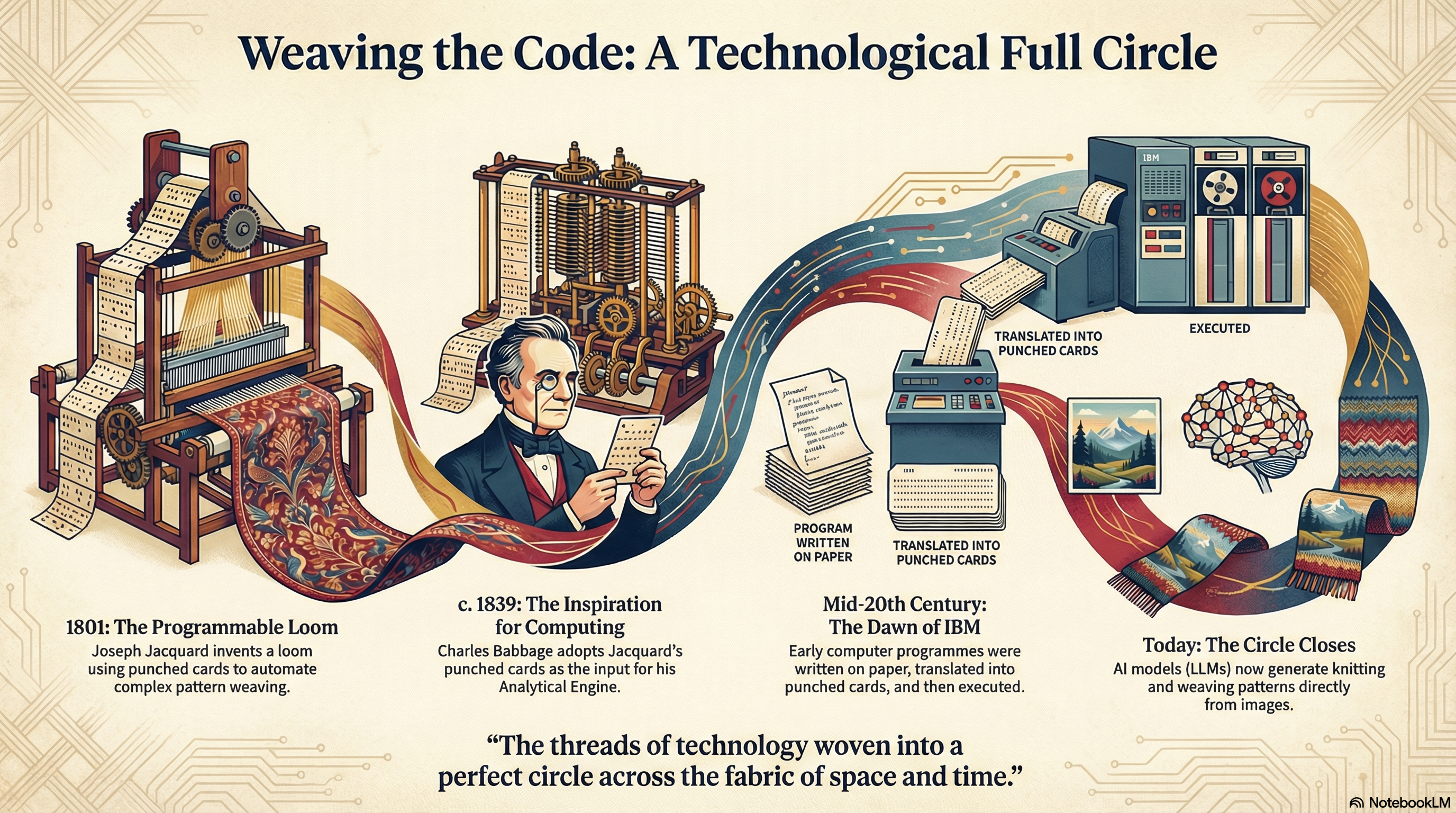
Do you know that the most famous image in the early history of computing is actually a piece of fabric? It is a portrait of a French engineer who lived during the Napoleonic Era, woven entirely on silk.
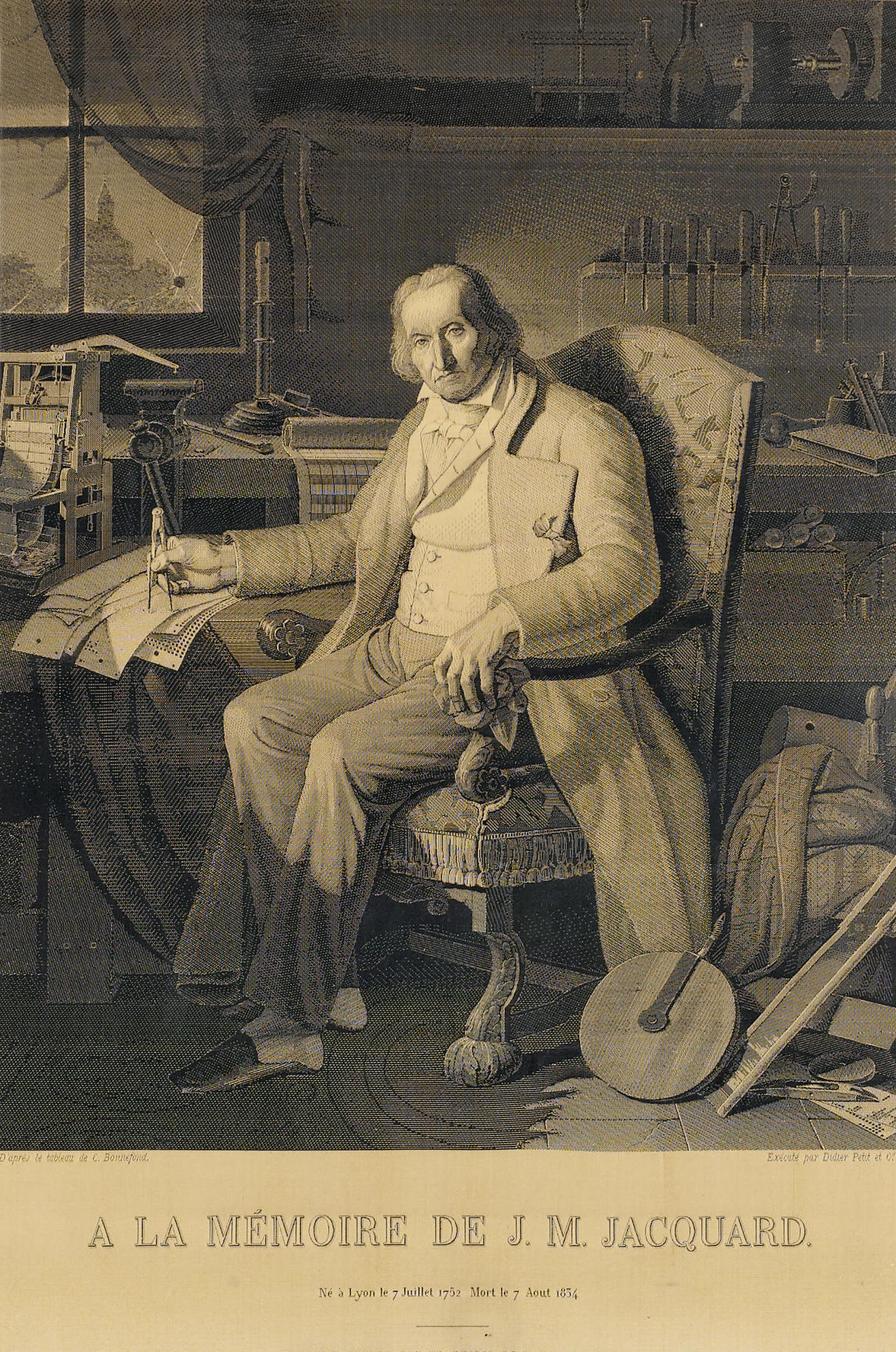

Joseph Marie Jacquard was born in Lyon, France and was a weaver and master inventor. He was celebrated by the Emperor Napoleon for the invention of a “programmable loom”. Jacquard’s idea of using punched cards to represent where a thread must go up or down in fine silk fabric to produce motifs and patterns with unlimited resolution immediately became a royal sensation.
Charles Babbage had not only personally possessed one of these portraits of Jacquard woven in silk using 24,000 punched cards, but was also deeply inspired by it. He adopted these very punched cards as the input device for his Analytical Engine.
After all, transcribing a complex design onto fabric by controlling threads with punched cards is a physical demonstration of binary logic, waiting to be spotted by a visionary like Babbage. Later, IBM produced computers that used punched cards and card readers. Early computer programs were written on paper, translated into punched cards, then loaded into a computer to be read and executed.
Wait - why am I boring you with the history of computers?
A couple of days ago, I saw a post in my feed where someone uploaded a photo to an LLM and asked it to return a pattern so his wife could knit the photo into socks or a handbag.
It was in that moment I saw the circle close. The punched cards of the 1800s have now evolved into artificial neural networks, only to give back a pattern showing where a thread must go up or down in a fabric.
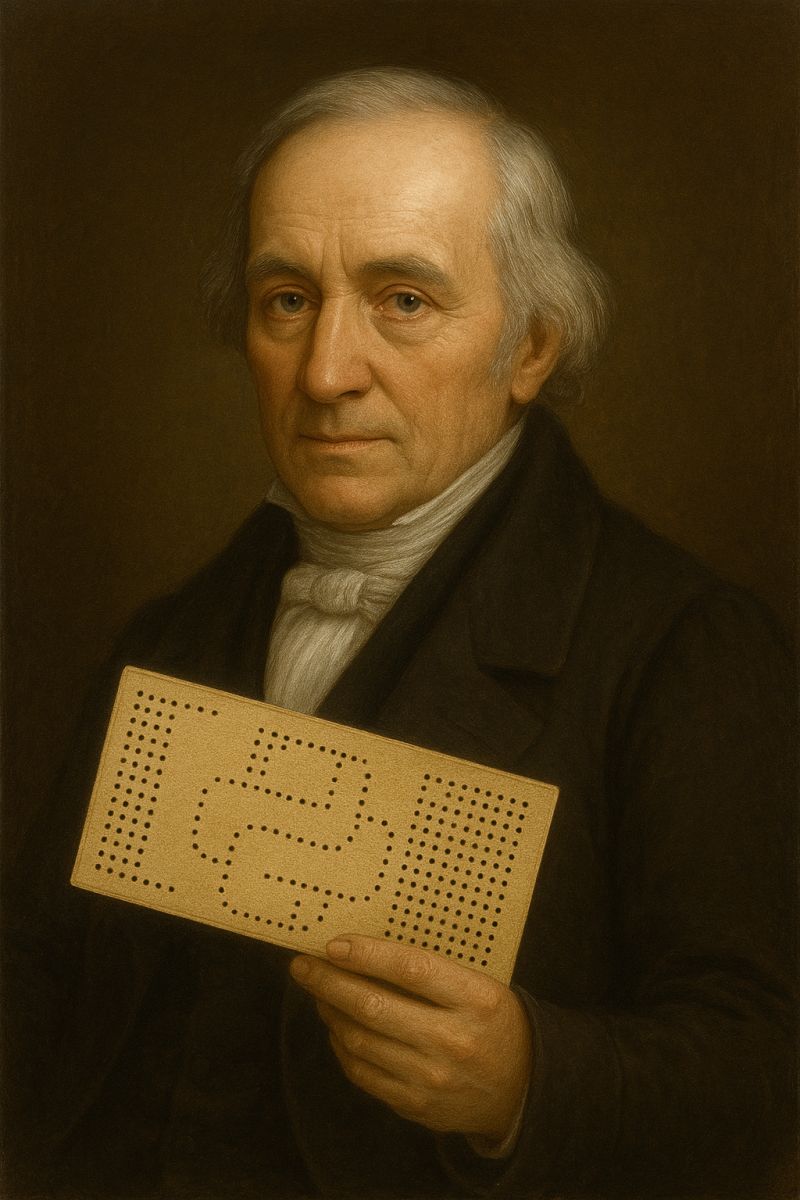
I started my career as a textile engineer, and I still vividly remember creating punches in cardboard for the Jacquard loom using a piano card-punching machine during practical sessions. Fast forward to this day of writing, I am now living in Lyon and working at the intersection of informatics and complex data, still looking for patterns not on fabric but on data.
I just had a moment of awe witnessing the threads of technology woven into a perfect circle across the fabric of space and time. This convergence felt deeply personal. It is a powerful reminder that technology often spirals upward instead of progressing linearly.